The interior of innovation
From the Netherlands to the glacier-carved lowlands of Ontario, Canada, it would be remiss to say that Ontario Plants Propagation began in 2002. In truth, they brought dreams and expertise to North America with roughly 500 years of innovative Dutch farming practices in tow. Today, the experienced management team is led by highly accomplished industry veterans, who continue to seek the next best approaches to sustainable agriculture. The ultra-modern greenhouses along Highway 3 utilize sophisticated and proprietary growing methods adopted from Dutch propagation best practices, technologies and systems. Such game-changing innovations were almost non-existent in North America before this standard was set.
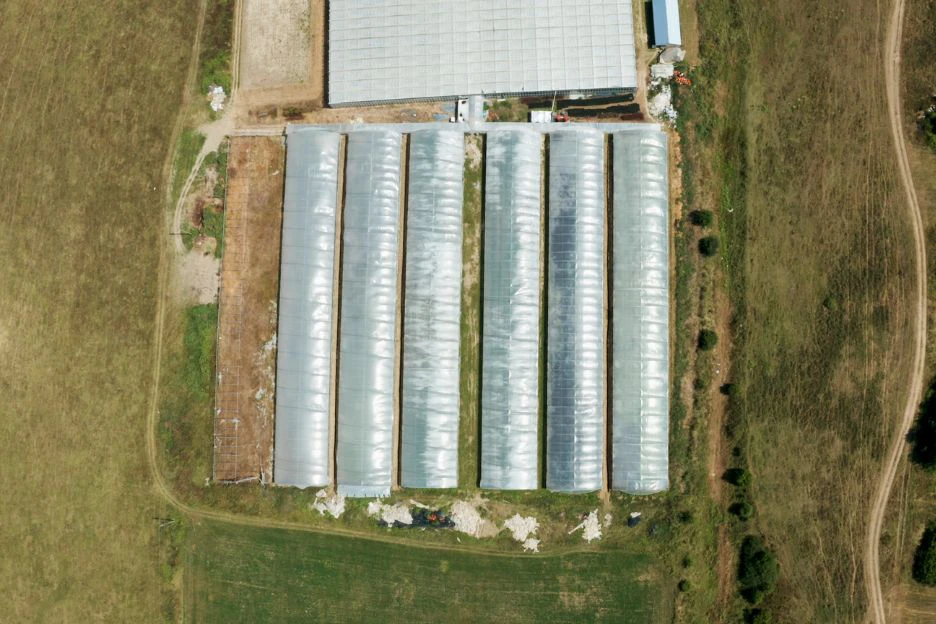
Ontario Plants Propagation is driven by customer needs. Their experts seek and leverage cutting-edge technologies and innovations at every stage to improve plant quality, service, sustainability and product offerings. Controlled environment agriculture (CEA) has recently become the standard in North America for a variety of crops, however, along Highway 3, beneath the endless rows of triangular-roofed greenhouses, CEA is a well-honored tradition.
Here lies another paradoxical secret to the success of Ontario Plants Propagation: their traditions are flexible rather than rigid. With the mission to be at the forefront of innovation, the company's experts must balance—quite deftly—the risk-averse needs of the now and the risk-required improvements for the future.
By growing hydroponically in greenhouses, Ontario Plants Propagation can produce crops with roughly 30 times higher yield than those in the open field while using less water. In fact, the facility recycles 660,000 gallons of water each day. Furthermore, hydroponics removes soil—and its diseases—from the equation altogether. Controlled and clean growing technology allows for minimal use of pesticides, herbicides and other synthetic chemicals. By working alongside customers and seed breeders, Ontario Plants Propagation helps to develop vegetable seeds and to drive new seeds naturally, meaning they aren't genetically modified (GMO).
Quality control is paramount for healthy crops. Strict hygiene measures are applied to greenhouses, personnel, carts, shipping trays and vehicles. The unexpected emergence of catastrophic diseases, such as Tomato Brown Rugose Fruit Virus (ToBRFV), necessitates the extreme level of biosecurity at Ontario Plants Propagation. Additionally, remote facilities ensure significantly less exposure to common growing pests and diseases.
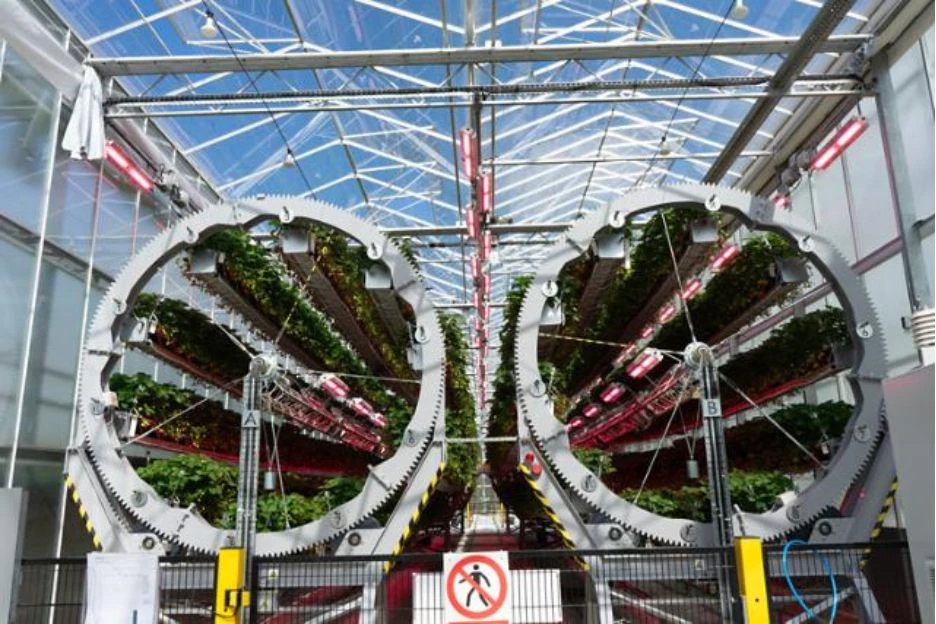
Above the plants, a checkerboard pattern of HPS fixtures and Fluence LEDs provide supplemental lighting for optimal growth. Ontario Plants Propagation's semi-retrofit of powerful and highly efficient LEDs throughout the 45-acre facility at St. Thomas is a major example of their dedication to innovation and sustainability. With support from Fluence's Technical Services Team, Ontario Plants Propagation received a major rebate that eased the financial and operational risks of investment and installation. The integration of advanced LEDs greatly reduced energy costs and unwanted heat output in the greenhouses, lowering peak energy consumption by 5%. Critically, Fluence VYPR LEDs reduced the overall starter plant delivery time, giving customers a head start on the competition.
Such innovations help to explain why Ontario Plants Propagation is the leading supplier of starter plants in North America, but technology doesn't tell the whole story. With clients across the U.S. and Canada—encompassing a vast array of climates, crops and customer needs—Ontario Plants Propagation relies on a deep reservoir of "know-how" and "know-why." Indeed, the ability to find success on a massive scale is perhaps their biggest industry secret.
Ontario Plants Propagation has incredible success rates with their seeds. Whereas the industry is known to overseed due to the difficulties of nurturing strong plants, the experienced team at St. Thomas finds consistent success with leaf-thin margins. Thus, it becomes clear why approximately 40% of North American greenhouses rely on this facility—in the middle of nowhere and everywhere—along Highway 3.