The Future of Food Supply in the Middle East
Resilience, Transformation, and Preparing for a New Era
For many years, food supply in the Middle East has been shaped not only by agricultural production capacity, but also by the continuity of external trade, logistics infrastructure, energy costs and water management. Despite a growing population and strong food demand, the region remains highly dependent on external supply for many staple products due to limited water resources, harsh climate conditions and restricted arable land. FAO identifies the Near East and North Africa as one of the most import-dependent regions in the world for agrifood products, and also projects that the region’s net food imports will continue to rise in the years ahead. (Source: OECD-FAO Agricultural Outlook 2024–2033)
The region’s traditional balance: continuity of supply matters as much as production
To understand the food system in the Middle East, it is necessary to look at its traditional balance. For a long time, food security in the region was managed not only through increasing domestic production, but also through securing imports, keeping ports operational, maintaining storage capacity and diversifying supply sources. The main reason is that, because of its natural resource constraints, the region is not well suited to a self-sufficiency model across all product categories. Imports of cereals, feed inputs and several basic food commodities have become not simply an economic choice, but a structural necessity. According to FAO, food security in the region is now treated not only as an agricultural policy issue, but as a strategic public policy priority. (Source: Strengthening agrifood supply chains in the Near East and North Africa)
At the center of this structure lies water. FAO’s regional water scarcity initiative describes the Near East and North Africa as the most water-insecure region in the world. In the organization’s recent regional publications, climate variability, water scarcity, land degradation and drought are all highlighted as major pressures accumulating across food systems. FAO assessments published in 2026 also emphasize that, in many countries across the region, annual renewable water availability per capita has fallen below critical thresholds, directly affecting agricultural production planning. (Source: The Regional Initiative on Water Scarcity for the Near East and North Africa)
A notable shift in recent years: the search for state-backed resilience
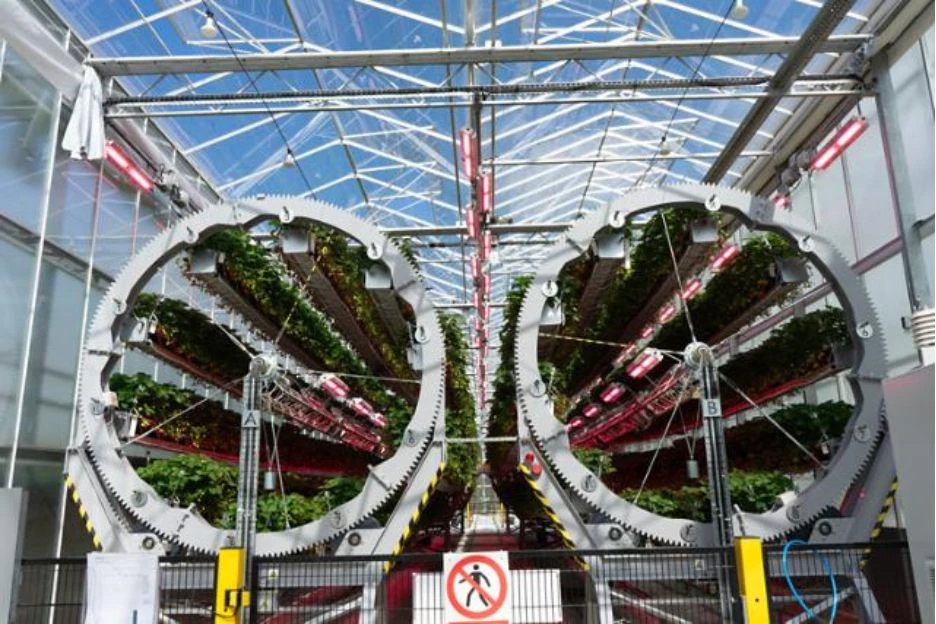
At the same time, an important transformation has been taking place across the region in recent years. An approach once focused mainly on supply security and import continuity is now moving toward improving the quality of domestic production, using water more efficiently and making agrifood systems more resilient. Particularly in Gulf countries, food security is now being addressed within a broader framework that includes strategic reserves, modern greenhouse systems, controlled-environment agriculture and logistics hubs. FAO notes that food security has become a central policy issue in the region, as population growth, resource constraints, high import dependency and global market shocks are pushing governments toward more systematic solutions.
The UAE’s National Food Security Strategy 2051 is one of the clearest examples of this shift. The official strategy brings together sustainable production, modern technologies, resource efficiency, supply diversification and crisis preparedness under a single framework. This approach treats food security not only as a matter of access to products, but also as an issue of technology, innovation and system design.
A similar direction can be seen in Saudi Arabia. The country’s National Water Strategy 2030 identifies the protection of water resources, demand management, improved efficiency and the more rational use of water in agriculture as core priorities. The strategy acknowledges that current consumption patterns, particularly in agriculture and urban use, are not sustainable and places greater emphasis on smarter water management. This directly affects agricultural production models, making controlled agriculture, precision irrigation, reuse and efficiency-focused solutions increasingly critical.