How is AI Used in Agriculture?
Artificial Intelligence (AI) is reshaping agriculture by introducing smart solutions that enhance productivity and sustainability. From predictive analytics to automated machinery, AI applications are vast and impactful.
For instance, AI algorithms analyse soil health, weather patterns, and crop conditions to optimize planting schedules and irrigation needs. This data-driven approach leads to better resource management and higher yields.
AI in agriculture examples
- Crop disease detection: AI-powered systems can identify diseases in crops at early stages, allowing for timely intervention and reducing crop losses.
- Automated weed control Systems: Robotic weeders equipped with AI can distinguish between crops and weeds, enabling precise removal without harming the desired plants.
- Livestock health monitoring: Sensors and AI analyze livestock behavior and health indicators, ensuring early detection of illnesses and improving animal welfare.
- Predictive analysis for crop yield: AI models forecast crop yields based on various parameters, aiding in better planning and market supply management.
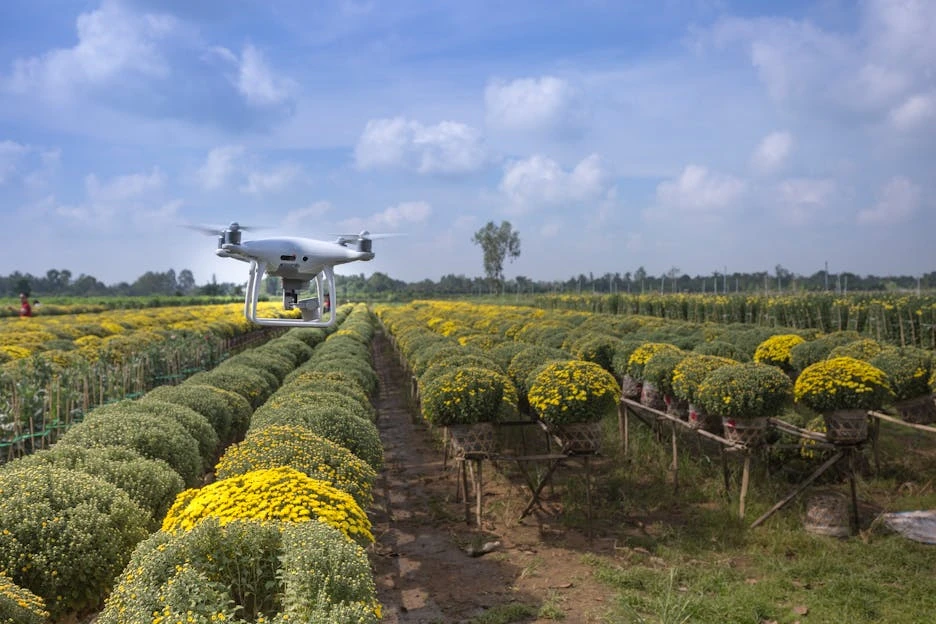
- Drone-assisted aerial surveillance: Drones equipped with AI monitor large fields, assessing crop health and identifying areas needing attention.

Benefits of AI in agriculture
The integration of AI in farming practices offers numerous advantages:
- Enhanced efficiency: Automation reduces manual labor and increases operational speed.
- Resource optimization: Precise application of water, fertilizers, and pesticides minimizes waste and environmental impact.
- Improved decision-making: Real-time data analysis supports informed decisions, leading to better crop management.
- Cost reduction: Efficient resource use and automation lower overall production costs.