Mayank Singh
Marketing, Communications, and Membership Lead
The Asia and Pacific Seed Alliance (APSA)
Protecting Integrity in the Seed Supply Chain
Why illegal seed practices are becoming a wider risk for industry, farmers, and food-systems across Asia-Pacific
This year the seed and ag-tech industries converge in Antalya for two major international gatherings, immediately following the global climate summit.
The Asian Seed Congress 2026, from 1 to 5 December, will bring the international seed community to Antalya, just days before Growtech Antalya. Immediately preceding these two major expositions is the 31st UN Climate Change Conference (COP31). Together, these gathering create a timely opportunity to look at the technologies transforming agriculture and improving climate resilience in food production systems.
For APSA, ensuring that innovation in the form of quality seed reaches the market is a daily occupation. However, the seed sector has grown in both scale and complexity in recent years, and with this complexity comes risks: the proliferation of counterfeit seed.
#SayNoToSeedPiracy will be one of the important narratives carried into ASC 2026, drawing attention to illegal seed practices and the shared responsibility of breeders, seed companies, distributors, authorities and farmers in protecting the integrity of the supply chain.
Across Asia-Pacific, illegal seed trade is becoming more organized, more mobile and increasingly difficult to distinguish from legitimate trade. They range from counterfeit and mislabeled seed to unauthorized multiplication of protected varieties, trademark misuse, sales outside licensing agreements, theft of proprietary parental material and breaches of certification or quality requirements.
A farmer buying seeds is making a decision that will affect a whole season. Entire harvests and livelihoods are at stake.
The baseline expectation is that the variety named on the packet is the variety inside it, the seed has been produced and handled to the required quality standard, and the product has moved through legitimate channels.
When this baseline expectation isn’t fulfilled, the consequences cascade across the entire food value chain.
Poor quality or counterfeit seed can result in reduced productivity, failed harvests and financial loss. Seeds moving outside established regulatory and phytosanitary channels can also introduce plant-health risks, including the movement of pests and diseases across borders. Repeated incidents can eventually weaken confidence in the formal seed market itself.
That makes illegal seed practices more than an intellectual property issue. They affect farmer trust, seed quality, biosafety, market integrity and the incentives that support continued investment in breeding. This is why the Seed Innovation and Protection Initiative Asia Pacific, or SIPI, describes illegal seed practices as a systemic and cross-border challenge rather than a collection of isolated infringements.
The damage also travels upstream.
Developing a new variety requires years of breeding, testing and commercialization. Companies invest in germplasm, research teams, trials, production systems and market development long before a new product generates returns. Illegal reproduction reduces those returns while adding another cost: monitoring markets, investigating suspicious products and pursuing infringements.
Effective intellectual property systems are therefore intended to preserve the incentive to invest while still allowing breeding progress and farmer access to continue. APSA’s position on intellectual property rights explicitly recognizes this balance. Under Plant Breeders’ Rights, for example, the breeder’s exception allows protected varieties to be used for further breeding without requiring authorization from the original breeder. It also allows smallholder farmers to save and reuse seed, even those of protected varieties.
Protecting innovation and enabling access do not have to be competing objectives. A functioning system needs both.
The problem is changing
Regional observations point to a shift from relatively small-scale local copying toward more organized networks. Digital platforms, messaging applications and informal logistics channels increasingly provide new ways to advertise, move and sell questionable seed. High-value hybrids, newly introduced varieties and fast-moving vegetable seeds are among the segments considered particularly exposed.
The product itself can also be harder to identify. Sophisticated imitation packaging, the use of genericized variety names and the mixing of legal and illegal supply can make suspect products look increasingly credible.
Asia-Pacific adds another layer of complexity. Regulatory systems vary widely, enforcement capacity is uneven, informal agricultural markets remain significant and large volumes of seed move across borders through both formal and informal channels. Price sensitivity and rapid varietal turnover create further opportunities for illegal operators.
The geography of the trade matters as well. Illegal multiplication may happen in one country, repackaging or re-labelling in another, distribution through a third and final sales across several markets. That makes country-by-country enforcement inherently limited.
A seed company may know that infringement is occurring and still face practical difficulties proving varietal identity, gathering evidence, acting across jurisdictions and securing cooperation from multiple authorities.
Enforcement is evolving across the region
Governments are responding in different ways.
Indonesia, for example, has combined administrative enforcement with increasing attention to online sales. Authorities have worked with other ministries, e-commerce associations and major marketplaces to monitor and remove illegal seed listings, alongside seller education and data sharing.
India has been developing digital traceability through the SATHI system, using QR codes to follow seed from production to farm-level sale and allowing farmers to verify origin and quality. Farmer awareness campaigns and stronger quality-assurance measures are also part of the approach.
Vietnam has used nationwide enforcement campaigns targeting smuggling, counterfeiting and intellectual property infringement, with attention extending to plant varieties, agricultural inputs and digital sales channels.
China, meanwhile, has signaled stronger judicial protection of plant variety rights, including punitive damages in serious infringement cases and closer scrutiny of activity across production, storage, repackaging and sales. Landmark rulings in favor of plant breeders indicate seriousness on the government’s part to uphold intellectual property.
These examples reflect different legal systems and market conditions. They also point toward the same conclusion: illegal seed practices cannot be addressed by one enforcement tool alone.
Preventative measures are needed across the whole supply chain
SIPI’s regional work emphasizes a combination of awareness, traceability, risk-based enforcement and stronger cooperation between industry and public authorities. Prevention can reduce enforcement costs, conflict and disruption while making illegal activity harder to sustain in the first place.
For seed companies, that means knowing where vulnerabilities sit in the supply chain.
Packaging integrity matters. Dealer education matters. Traceability beyond the first point of sale matters. Companies also need mechanisms to share information when the same methods, sellers or networks appear across markets.
Farmers and distributors need support as well. If a legitimate packet cannot easily be distinguished from a counterfeit one, or if the risks of buying from an unknown source are poorly understood, enforcement will not be enough.
Awareness should therefore focus on practical questions: Where did this seed come from? Is the seller authorized? Can the variety and lot be verified? Does the packaging show signs of tampering? Is the price unusually low? Is there a clear channel for reporting concerns?
A necessary distinction: farmer use versus commercial piracy
The discussion also requires precision.
Farm-saved seed and illegal commercial reproduction are not the same thing.
APSA supports farmers’ privilege under the UPOV 1991 framework, under which countries may allow farmers, within reasonable limits and while safeguarding breeders’ legitimate interests, to use seed harvested on their own holdings for further propagation on those holdings. APSA distinguishes this from commercial “across-the-fence” sales of protected seed.
That distinction matters because effective protection depends on credibility. Rules need to target genuine infringement without confusing legitimate farmer practices with organized commercial piracy. Farmers rights and breeders’ rights are not conflicting principles, despite what many claim.
Integrity has to become a shared operating principle
Illegal seed practices exploit gaps: gaps in regulation, traceability, awareness and coordination between jurisdictions.
Closing them requires action across the value chain.
Law enforcement needs the technical capacity to identify varieties and investigate cases. Industry needs stronger distribution controls, better monitoring and responsible information sharing. Dealers and growers need practical ways to verify what they are buying. Regional organizations can help connect those efforts when illegal production, repackaging, distribution and sales cross national borders.
That collective responsibility is at the heart of APSA’s #SayNoToSeedPiracy campaign.
As the seed community gathers for Asian Seed Congress 2026 in Antalya this December, APSA will use the Congress to keep the issue visible and encourage members and partners to consider what they can do within their own organizations and markets: strengthen traceability, protect proprietary material, educate distributors and customers, report suspicious activity and share relevant intelligence through trusted channels.
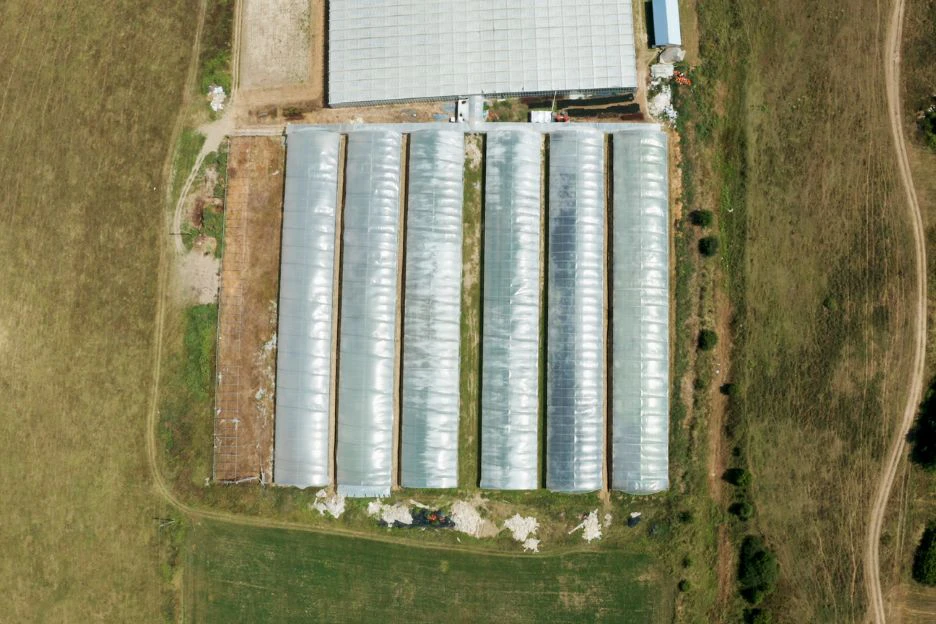
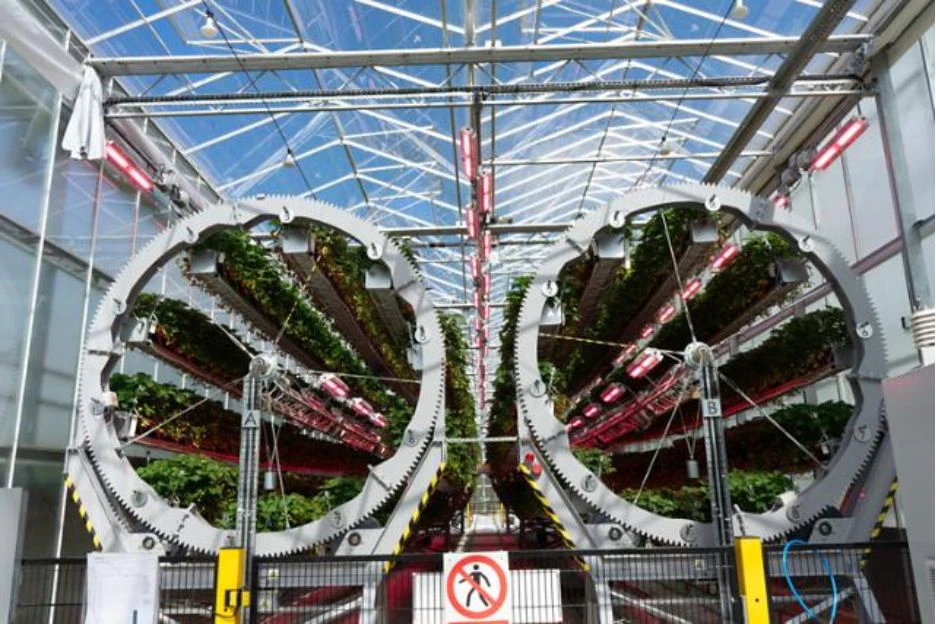
The timing also creates an unusual opportunity for the wider agricultural community. Growtech Antalya will bring the greenhouse, protected cultivation and agricultural technology sectors to the city immediately beforehand, giving professionals attending both events a broader view of the systems surrounding modern crop production.
For APSA, the message is simple: grow with integrity.
Every legitimate sale protects more than a company’s revenue. It supports the farmer whodepends on predictable crop performance, the breeder investing in the next generation ofvarieties and the confidence on which formal seed markets depend.
When the industry meets in Antalya this year, #SayNoToSeedPiracy is ultimately a call foreach part of that industry to examine its own role.
Know your supply chain. Protect your varieties. Buy and sell through legitimate channels.And when something looks wrong, speak up.
Mayank Singh
Marketing, Communications, and Membership Lead
The Asia and Pacific Seed Alliance (APSA)